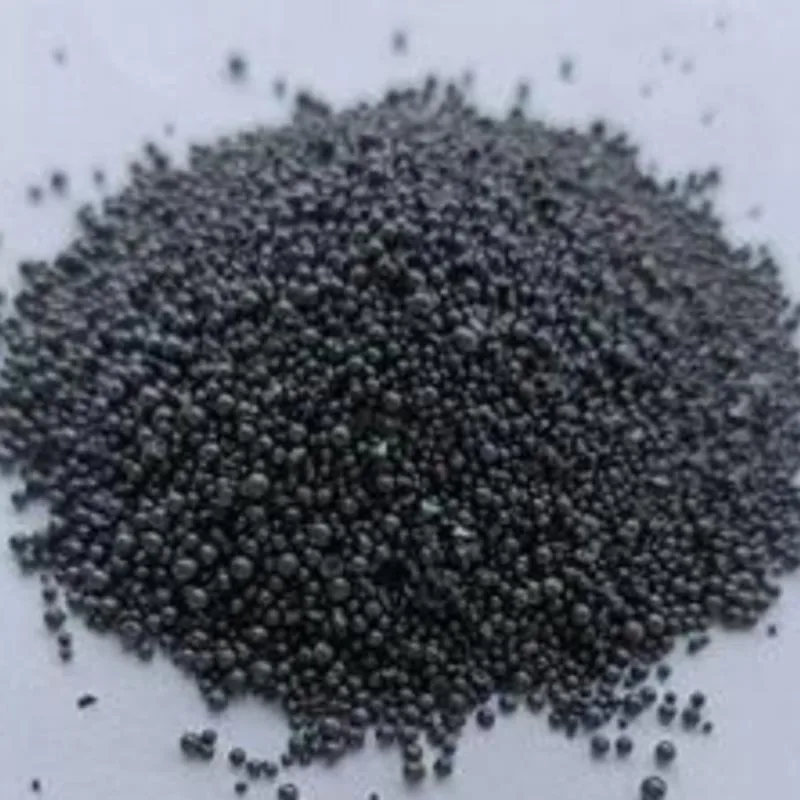
How Can Counterweight Steel Grit Improve Ballast Density and Long-Term Stability
Article Summary: Counterweight steel grit is a dense, angular steel filling material designed for applications where weight accuracy, compact packing, and resistance to movement are essential. Haishan supplies counterweight steel grit for elevator counterweights, construction machinery ballast, ship ballast systems, and industrial balancing applications. With a bulk density of at least 4.0 g/cm³, carefully screened particle sizes, and no hollow particles detected under its stated quality controls, this material offers manufacturers a practical solution for achieving consistent ballast performance in limited spaces.

Table of Contents
- What Is Counterweight Steel Grit?
- How Is Counterweight Steel Grit Manufactured?
- What Are the Key Properties of Counterweight Steel Grit?
- Where Is Counterweight Steel Grit Used?
- How Does Steel Grit Compare with Other Filling Materials?
- How Do You Choose the Right Particle Size?
- What Quality Checks Should Buyers Request?
- How Should Counterweight Steel Grit Be Handled and Stored?
- Frequently Asked Questions
- Conclusion: Choosing the Right Counterweight Filling Material
What Is Counterweight Steel Grit?
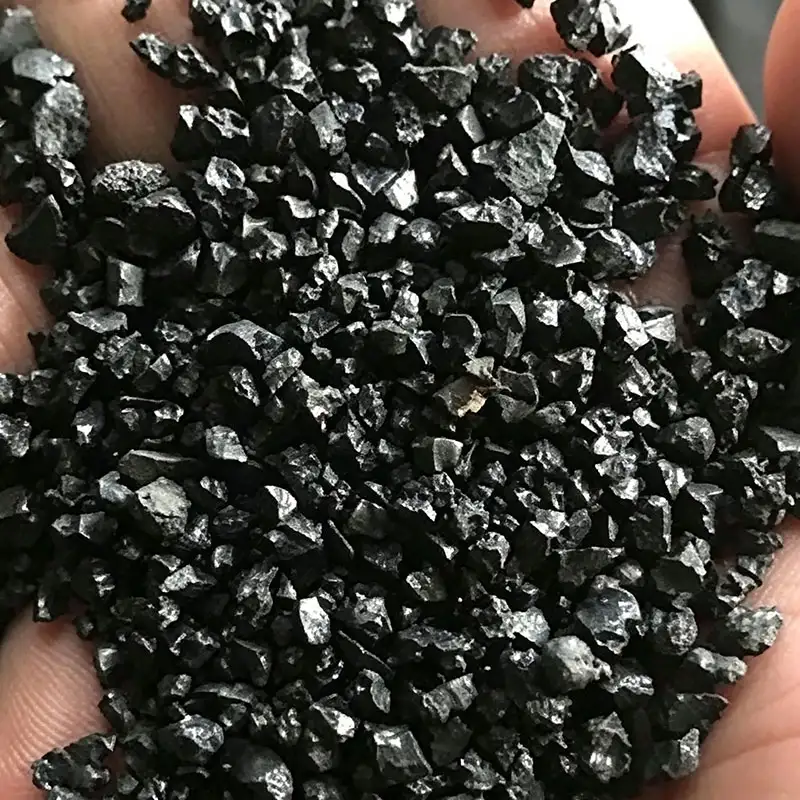
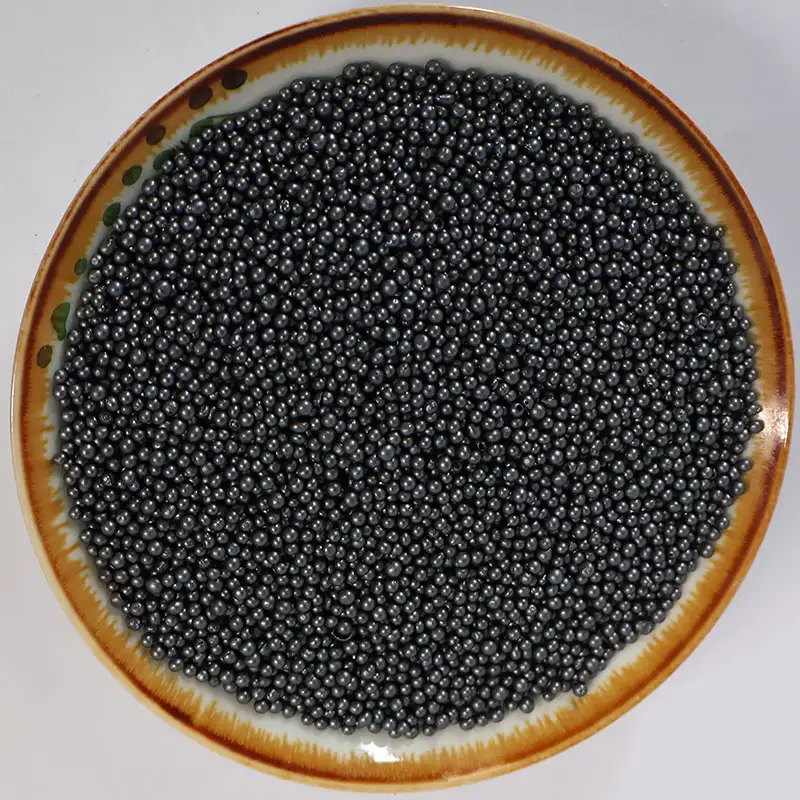
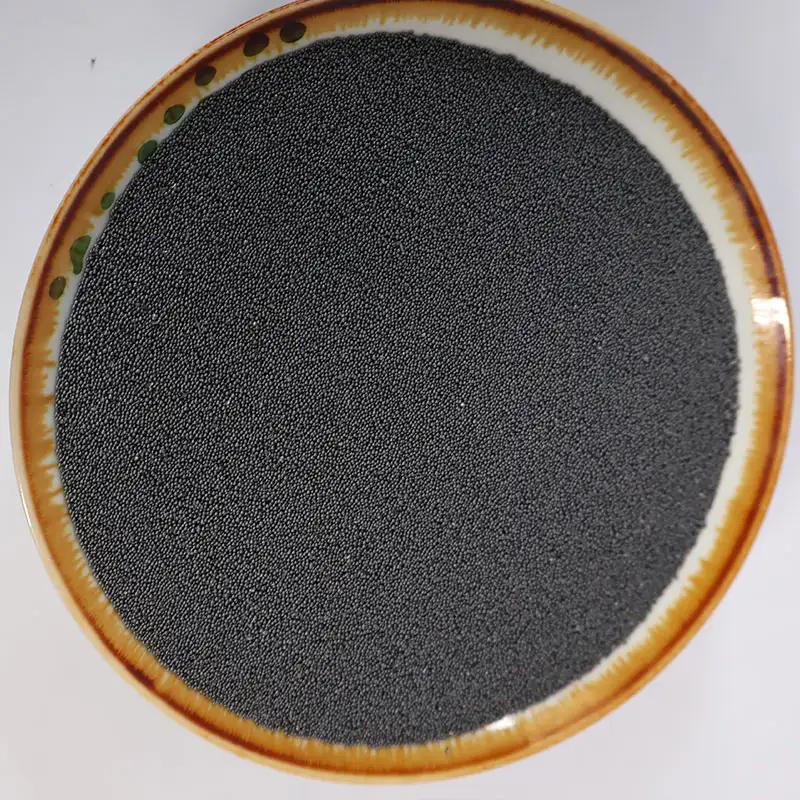
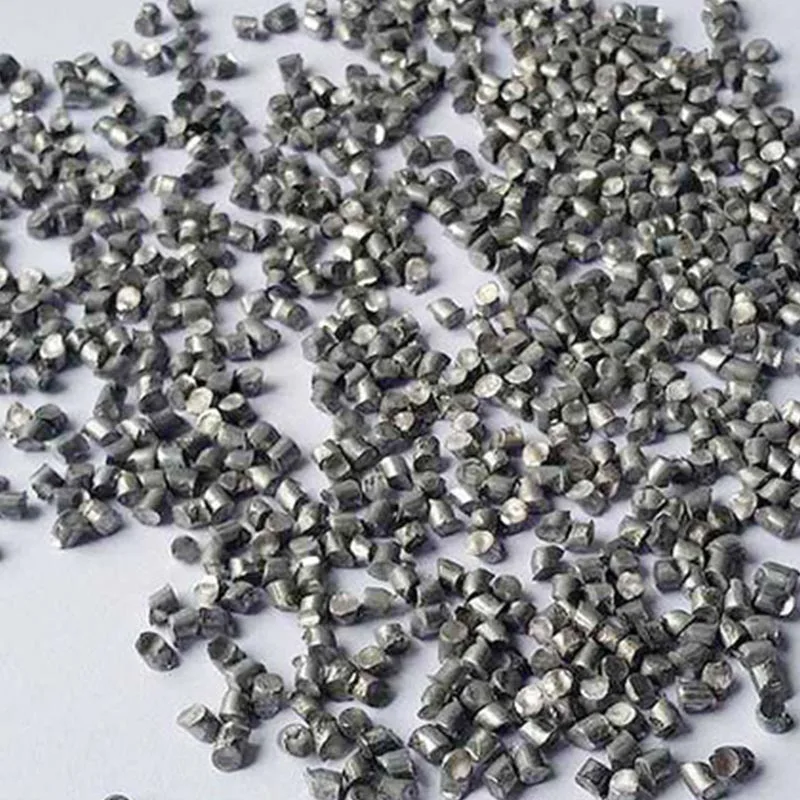
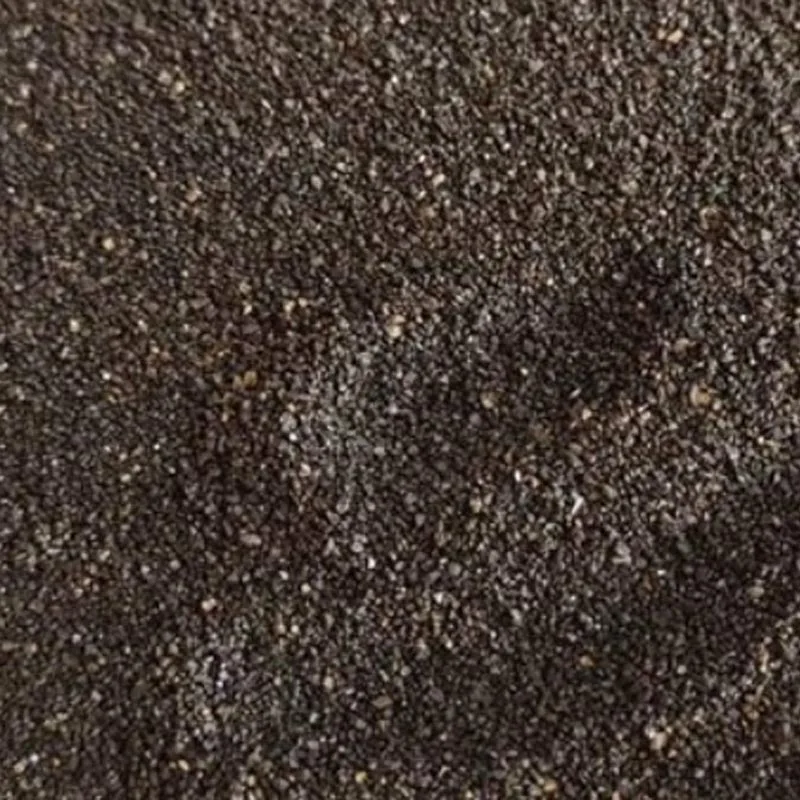
Counterweight steel grit is an angular, high-density steel aggregate developed specifically for filling applications in which mass per unit volume and stable weight distribution matter more than abrasive performance. Unlike conventional blasting abrasives, this material is intended to remain inside a ballast cavity rather than strike a workpiece.
Haishan produces counterweight steel grit by processing high-carbon steel into solid, irregular particles. These particles can interlock during filling, helping reduce movement when machinery vibrates or changes operating conditions. Its relatively high bulk density also enables manufacturers to achieve a target counterweight mass within a restricted cavity volume.
Typical applications include elevator counterweights, cranes, forklifts, industrial machinery, ship ballast systems, and selected fitness equipment. The appropriate grade depends on cavity geometry, filling equipment, target mass, and operating environment.
For product details, visit the Haishan Counterweight Steel Grit product page.
How Is Counterweight Steel Grit Manufactured?
Manufacturing quality directly affects particle integrity, density consistency, and filling performance. A controlled production process helps ensure that the finished material meets the dimensional and physical requirements of industrial ballast applications.
The typical production process involves the following stages:
- Raw material selection: Suitable high-carbon steel materials are selected to support the required chemical composition and mechanical properties.
- Steel melting: The selected material is melted in an electric arc furnace under controlled production conditions.
- Shot formation: Molten steel is processed into small steel particles before further size and shape processing.
- Crushing: The steel particles are crushed to produce the angular shape required for counterweight filling.
- Screening: The material is separated into specified particle-size fractions to support different cavity designs and filling systems.
- Heat treatment: Appropriate tempering helps reduce internal stress and improve particle toughness.
- Density and quality inspection: Testing checks bulk density, particle-size distribution, chemical composition, and internal soundness.
Removing hollow or porous particles is particularly important because internal voids can undermine the consistency of a filling material. Buyers should confirm the supplier's inspection methods and the acceptance criteria used for each production lot.
What Are the Key Properties of Counterweight Steel Grit?
When evaluating counterweight steel grit, buyers should focus on measurable properties that influence filling efficiency, total weight, stability, and service life. Haishan's published specifications provide a useful starting point for technical evaluation.
| Property | Published Specification | Practical Importance |
|---|---|---|
| Bulk density | ≥ 4.0 g/cm³ | Helps determine the material volume needed to achieve a target mass. |
| True density | ≥ 7.2 g/cm³ | Indicates the density of the solid material rather than the bulk packing density. |
| Particle shape | Angular and irregular | Promotes particle interlocking and helps resist movement. |
| Hardness | 40–50 HRC, reference value | Provides material identification information but is not the primary performance indicator for ballast filling. |
| Hollow particle content | None detected | Supports consistent filling quality when assessed using the specified inspection method. |
| Moisture content | ≤ 0.5% | Helps control the condition of the supplied material during filling and storage. |
| Particle-size options | Approximately 0.355–2.80 mm for standard SG grades | Allows selection according to cavity dimensions and filling equipment. |
Bulk density and true density should not be treated as interchangeable measurements. Bulk density includes the spaces between particles in a container, whereas true density refers to the solid material itself. The actual mass that fits inside a counterweight cavity therefore depends on particle size, packing arrangement, cavity geometry, and the filling procedure.
For engineering calculations, use the supplier's verified bulk-density report and validate the result through a representative filling trial.
Where Is Counterweight Steel Grit Used?
The material is suitable for industrial systems that require concentrated mass, dependable filling behavior, and effective use of available space.
Elevator Counterweights
Elevator counterweights help balance the car and reduce the load handled by the drive system. A dense filling material can help manufacturers achieve the required assembly mass within a compact frame. Particle-size selection should account for narrow channels, internal partitions, and the intended filling method.
Construction and Heavy Machinery
Cranes, forklifts, excavators, and other machines may require ballast to support their intended balance and operating configuration. Counterweight steel grit can be used in engineered ballast compartments where its density and particle stability meet the equipment manufacturer's requirements.
Marine Ballast Systems
Ship ballast tanks and keel-related ballast structures may require filling materials selected for specific weight and space constraints. In these applications, moisture protection, corrosion management, containment integrity, and applicable marine requirements must be considered before material selection.
Industrial Equipment and Fitness Products
Machine tools, vibrating equipment, and certain fitness products may use compact filling materials to achieve a target weight. Angular steel particles can be useful when the filling must remain relatively stable during repeated movement or vibration.
Before selecting a grade, verify the required mass, usable cavity volume, access opening, expected vibration, and any applicable equipment safety standards.
How Does Steel Grit Compare with Other Filling Materials?
Choosing the right counterweight material involves more than comparing purchase prices. Density, particle movement, cavity volume, corrosion resistance, and filling speed all affect the final result.
| Material | Approximate Bulk Density (g/cm³) | Particle Characteristics | Potential Advantages | Considerations |
|---|---|---|---|---|
| Counterweight steel grit | 4.0–4.4 | Angular | Dense packing and particle interlocking | Requires moisture protection in damp environments. |
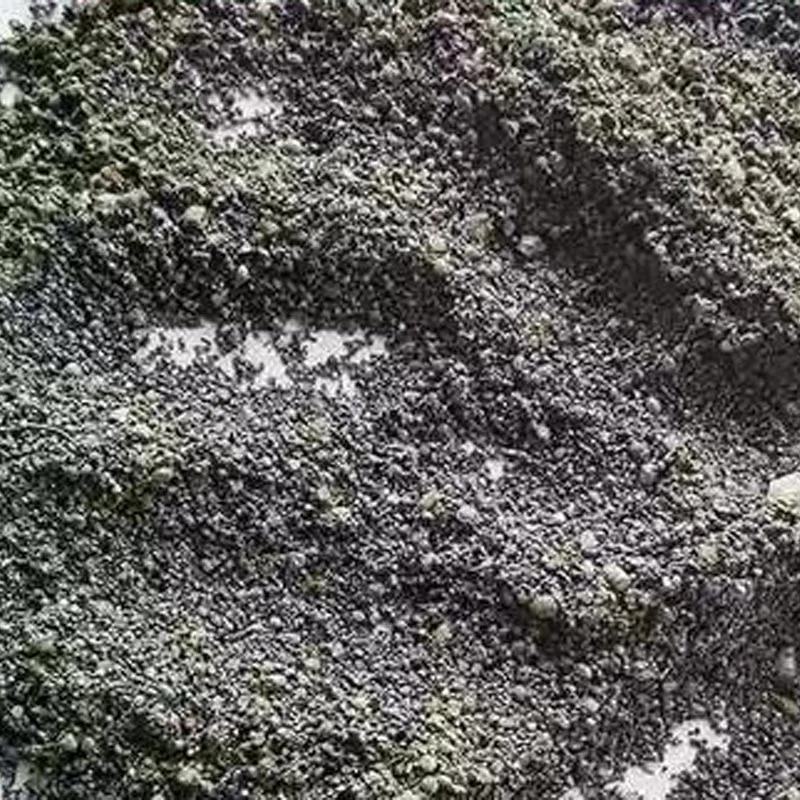
| Ordinary sand | 1.5–1.8 | Irregular | Widely available and economical | Requires considerably more volume for the same mass. |
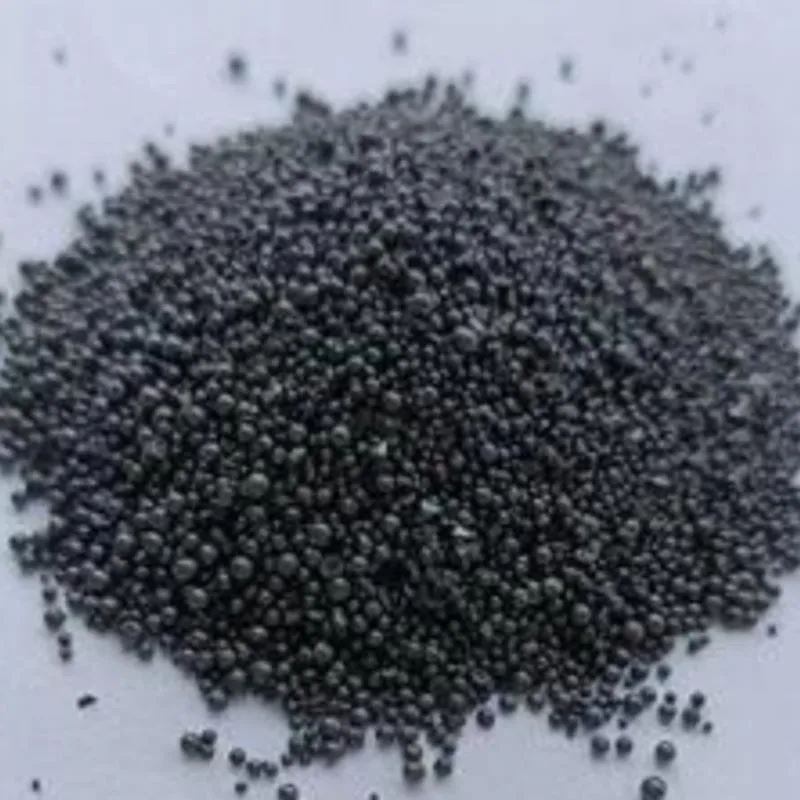
| Steel shot | 4.3–4.5 | Spherical | Flows readily through suitable filling systems | Round particles may move more easily under vibration. |
| Iron sand or magnetite | 2.5–3.0 | Generally granular | May offer a lower-cost option for less space-constrained designs | More volume may be needed to achieve the same weight. |
| Lead shot | 6.0–7.0 | Spherical | High density in compact spaces | Lead toxicity creates significant handling, containment, and compliance concerns. |
Note: These are indicative comparison ranges, not guaranteed values for every supplier or grade. Actual bulk density varies with particle size, grading, and packing conditions. Obtain comparable test reports before making a purchasing decision.
Counterweight steel grit offers a useful balance of density, filling stability, and material cost for many industrial applications. However, the best choice depends on the design requirements rather than density alone. Where rapid flow through narrow openings is essential, spherical steel shot may be worth evaluating alongside angular grit.
How Do You Choose the Right Particle Size?
Particle size affects how the material flows into a cavity, how tightly it packs, and how easily it can pass through filling equipment. Haishan lists standard SG grades from approximately 0.355 mm to 2.80 mm, with custom blends available on request.
| SG Grade | Approximate Particle Size | Typical Selection Consideration |
|---|---|---|
| SG 1# | 0.355 mm | Small openings and complex cavities. |
| SG 2# | 0.425 mm | Fine filling where access and particle distribution are important. |
| SG 3# | 0.50 mm | Fine-to-medium filling requirements. |
| SG 4# | 0.60 mm | Applications requiring relatively fine material. |
| SG 5# | 0.85 mm | Intermediate filling conditions. |
| SG 6# | 1.00 mm | General industrial cavities with compatible openings. |
| SG 8# | 1.40 mm | Larger openings and suitable mechanical filling systems. |
| SG 10# | 2.00 mm | Relatively open cavities where flowability is important. |
| SG 14# | 2.80 mm | Large, accessible cavities designed for coarser particles. |
These are general selection guidelines, not universal engineering rules. Smaller particles may fill narrow spaces more effectively, but the final packing density depends on the particle-size distribution and cavity geometry. Coarser particles may flow more readily but may not suit narrow passages.
For a reliable selection, follow these steps:
- Measure the cavity's usable volume and smallest filling opening.
- Calculate the target mass and estimate the required bulk volume.
- Check compatibility with the hopper, chute, or automated filling system.
- Evaluate particle-size distribution and packing behavior using a representative sample.
- Confirm the target mass and distribution after filling and compaction.
For reference, the basic relationship is:
Estimated fill mass = usable cavity volume × measured bulk density
The calculation provides an estimate rather than a guaranteed installed mass. Allow for internal structures, unused space, packing variation, and the actual filling procedure.
What Quality Checks Should Buyers Request?
For manufacturers purchasing counterweight steel grit in bulk, consistent quality is essential to repeatable production. A clear inspection process also helps prevent discrepancies between the specified material and the delivered product.
Consider requesting the following documentation from your supplier:
- Certificate of Analysis (COA): Records the relevant chemical composition and batch information.
- Bulk-density test report: Supports calculations for target mass and cavity volume.
- Particle-size distribution report: Confirms whether the material matches the specified grading.
- Internal soundness inspection: Documents the method and results used to identify hollow or porous particles.
- Material Safety Data Sheet (MSDS/SDS): Provides information on safe handling, storage, and exposure controls.
- Quality management documentation: Helps buyers assess the supplier's quality-control procedures and relevant certifications.
Haishan states that its production quality controls include chemical composition, bulk density, particle-size distribution, and internal soundness checks. Buyers should confirm the applicable documents, test methods, and acceptance criteria for the specific order.
For dependable procurement, agree on the required grade, tolerances, packaging, sampling method, and traceability requirements before production or shipment.
How Should Counterweight Steel Grit Be Handled and Stored?
Correct handling helps preserve material condition and supports a more predictable filling process. Although counterweight steel grit is designed for industrial use, carbon steel can corrode when exposed to moisture over time.
Recommended practices include:
- Keep the material dry: Store bags or containers in a sheltered area away from standing water and excessive humidity.
- Inspect packaging: Check for tears, contamination, or moisture ingress before use.
- Use appropriate protective equipment: Wear safety glasses and gloves, and avoid breathing airborne dust.
- Control filling operations: Use compatible equipment and procedures to minimize spills and unnecessary dust generation.
- Verify the installed weight: Check the completed assembly against its engineering specification.
- Protect the filled cavity: Use suitable sealing or protective coatings when the application is exposed to humid or outdoor conditions.
In critical applications, follow the equipment manufacturer's instructions and relevant workplace safety requirements. The final containment design should prevent unintended material release during service.
Frequently Asked Questions
1. What is counterweight steel grit mainly used for?
Counterweight steel grit is primarily used as a dense filling material for elevator counterweights, construction machinery ballast, ship ballast systems, industrial equipment, and selected fitness products. It is intended for weight filling rather than abrasive surface treatment.
2. What is the bulk density of Haishan counterweight steel grit?
Haishan publishes a bulk density of at least 4.0 g/cm³. The actual value depends on particle size and packing conditions. Buyers should use the density report for the supplied batch when calculating filling quantities.
3. Can counterweight steel grit be used for sandblasting?
No. Haishan's counterweight steel grit is designed specifically for ballast filling, not abrasive blasting, descaling, or surface preparation. Its properties and intended use differ from those of dedicated blasting abrasives. Select a suitable blasting-grade steel grit for surface treatment operations.
4. Which particle size is best for elevator counterweights?
The appropriate size depends on the cavity opening, internal geometry, filling equipment, and target mass. Smaller grades may be suitable for narrow or complex cavities, while coarser grades may work well in larger, accessible compartments. A filling trial is recommended before finalizing the specification.
5. Will counterweight steel grit settle or move during operation?
Its angular particles can interlock and resist movement, helping reduce settling under vibration. However, performance depends on cavity geometry, particle grading, vibration intensity, and installation practices. Proper filling, compaction where appropriate, and secure containment are important for critical applications.
6. Does counterweight steel grit rust?
Yes. Carbon steel can rust when exposed to moisture. Dry indoor applications may require less protection, while humid, marine, or outdoor environments may need sealed cavities, suitable coatings, or a corrosion-resistant alternative.
7. What documents should accompany an order?
Depending on the application, request a Certificate of Analysis, bulk-density report, particle-size distribution data, safety documentation, and applicable quality-management certificates. Specify documentation requirements when placing the purchase order.
8. Can Haishan supply customized counterweight steel grit?
Haishan indicates that custom particle-size blends are available on request. Provide the target weight, cavity dimensions, filling method, preferred particle-size range, quantity, and delivery destination so the supplier can assess the appropriate specification and quotation.
Conclusion: Choosing the Right Counterweight Filling Material
Counterweight steel grit is a practical option for industrial applications that demand concentrated mass, controlled particle sizing, and stable filling behavior. Its angular shape, published bulk-density specification of at least 4.0 g/cm³, and quality checks for particle integrity make it worth evaluating for elevators, construction machinery, ballast systems, and other weight-sensitive assemblies.
The best results come from matching particle size and bulk density to the actual cavity design, confirming batch documentation, and providing suitable protection against moisture. Manufacturers should also distinguish ballast-grade steel grit from abrasive blasting media to ensure the material is used for its intended purpose.
Looking for a reliable supply of Counterweight Steel Grit for your industrial project? Haishan can help you evaluate particle-size options, review technical requirements, and discuss bulk purchasing or customized specifications. Visit the official Counterweight Steel Grit product page to learn more, or contact us to request a quotation and find a suitable filling solution for your application.
Related News
- How Can Haishan Elevator Counterweight Sand Improve Weight Accuracy, Noise Control, and Production Efficiency
- How Can Mechanical Filling Counterweight Sand Improve Equipment Stability, Weight Distribution, and Operational Reliability
- How Can Steel Wire Cut Shot Improve Heavy-Duty Surface Preparation and Industrial Efficiency
- How Can Mechanical Filling Counterweight Sand Improve Automated Ballast Filling and Equipment Stability
- How Can Mechanical Filling Counterweight Sand Improve Industrial Equipment Stability and Automated Filling Efficiency
- How Can Concrete Counterweight Sand Deliver Higher Density, Better Stability, and More Efficient Precast Production
Leave me a message