How Can Mechanical Filling Counterweight Sand Improve Industrial Equipment Stability and Automated Filling Efficiency
Article Summary: Mechanical filling systems require counterweight materials that combine high density, stable flow, low moisture absorption, and reliable performance under vibration. Haishan provides Mechanical Filling Counterweight Sand designed for automated dry filling of enclosed cavities in industrial machinery, equipment frames, cabinets, fan housings, air compressors, and vibration-control systems. With a bulk density of approximately 7.0 g/cm³, optimized particle shape, low moisture absorption, and purified composition, this material offers an efficient alternative to conventional ballast solutions where dry, clean, and precisely controlled filling is required.
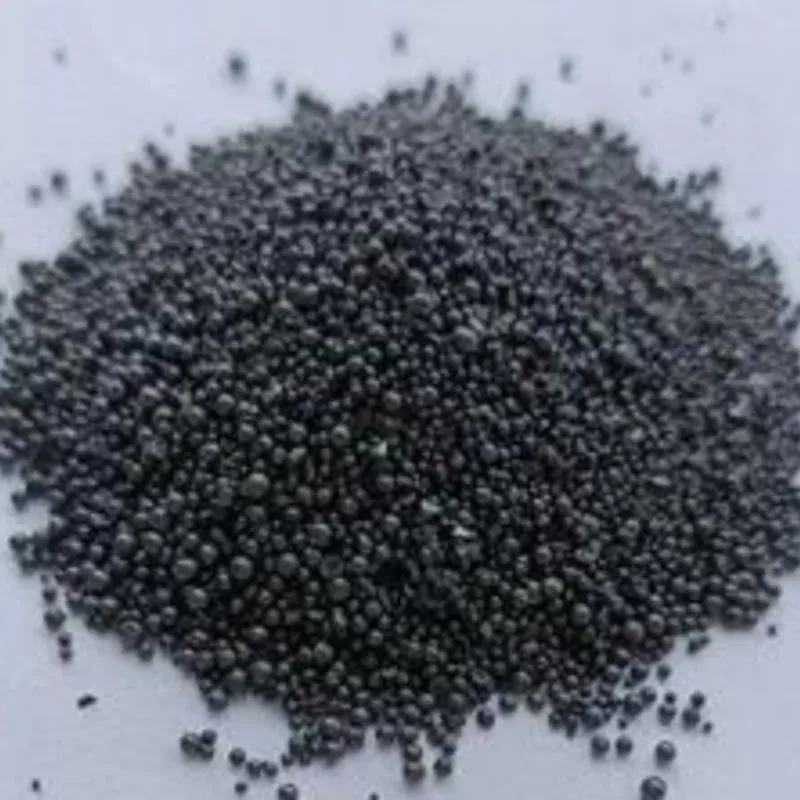
Table of Contents
- What Is Mechanical Filling Counterweight Sand?
- Why Does High-Density Counterweight Sand Matter?
- What Are the Key Performance Features?
- Mechanical Filling Counterweight Sand Technical Specifications
- Where Is Mechanical Filling Counterweight Sand Used?
- How Does It Support Automated Filling?
- How Should Buyers Select the Right Counterweight Sand?
- How Is Product Quality Controlled?
- Frequently Asked Questions
- Conclusion
What Is Mechanical Filling Counterweight Sand?
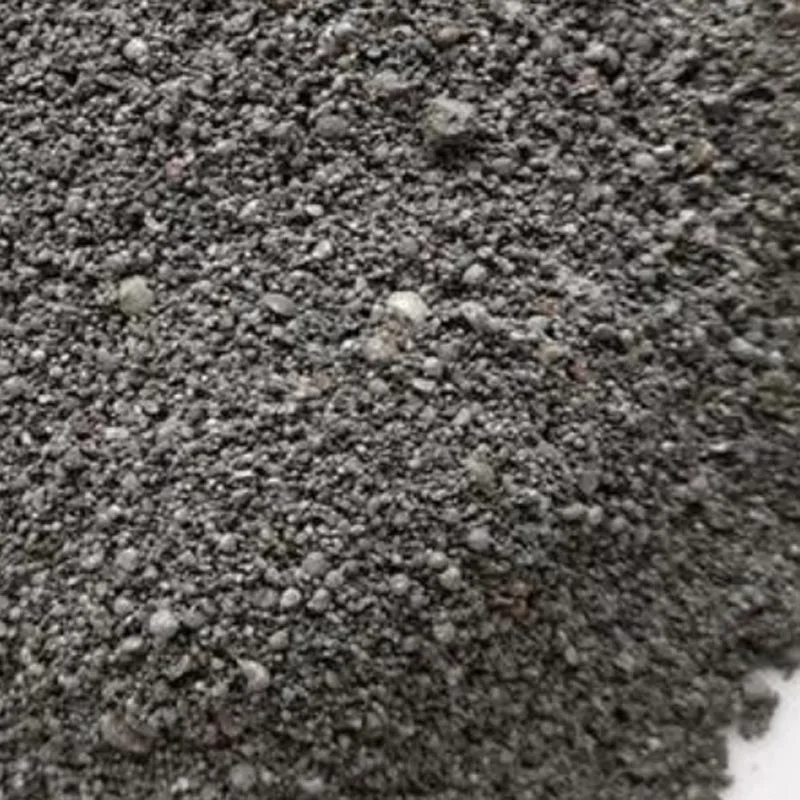
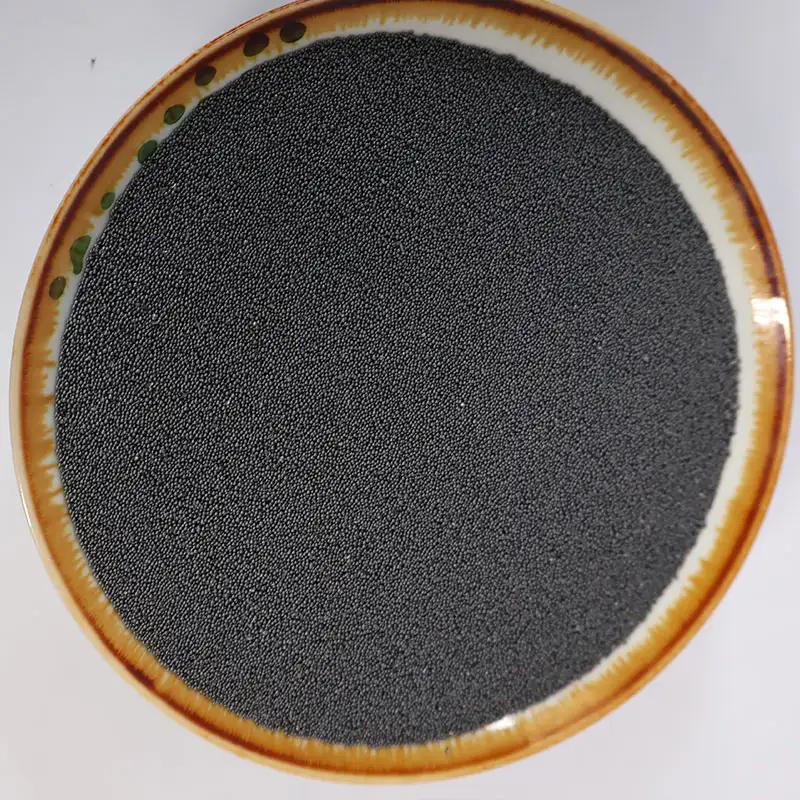
Mechanical Filling Counterweight Sand is a high-density granular material developed for dry filling applications where industrial machinery requires additional ballast without introducing cement, water, or complicated curing processes. Unlike conventional concrete-based counterweights, granular filling materials can be delivered directly into enclosed cavities through gravity systems, manual filling equipment, or automated negative-pressure conveying systems.
For industrial equipment manufacturers, the material must do more than simply add weight. It needs to flow consistently through pipelines, occupy available cavity space efficiently, remain stable during continuous vibration, and avoid unwanted interaction with nearby sensors or electronic components.
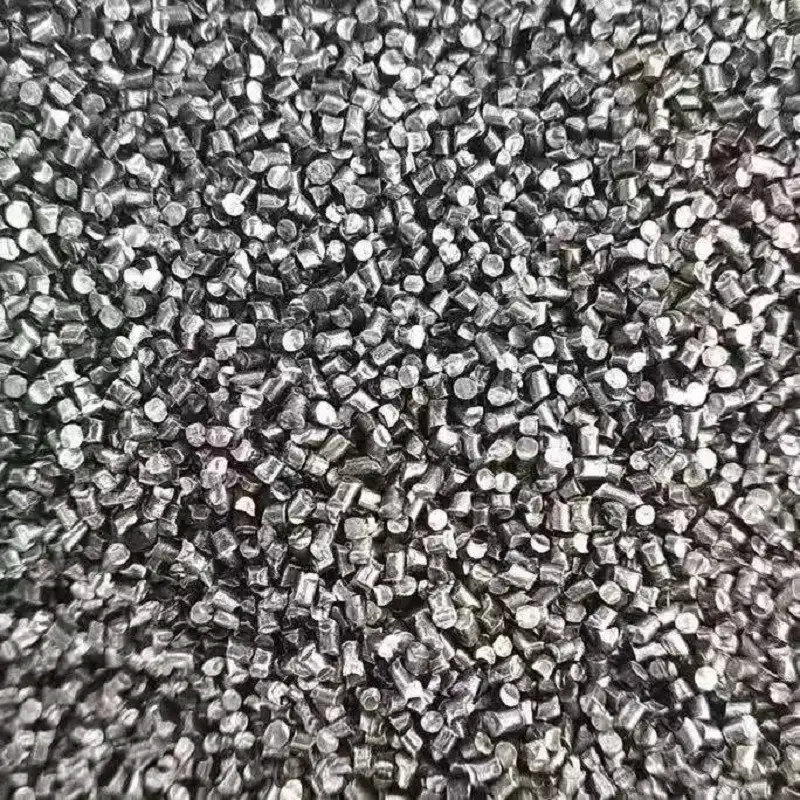
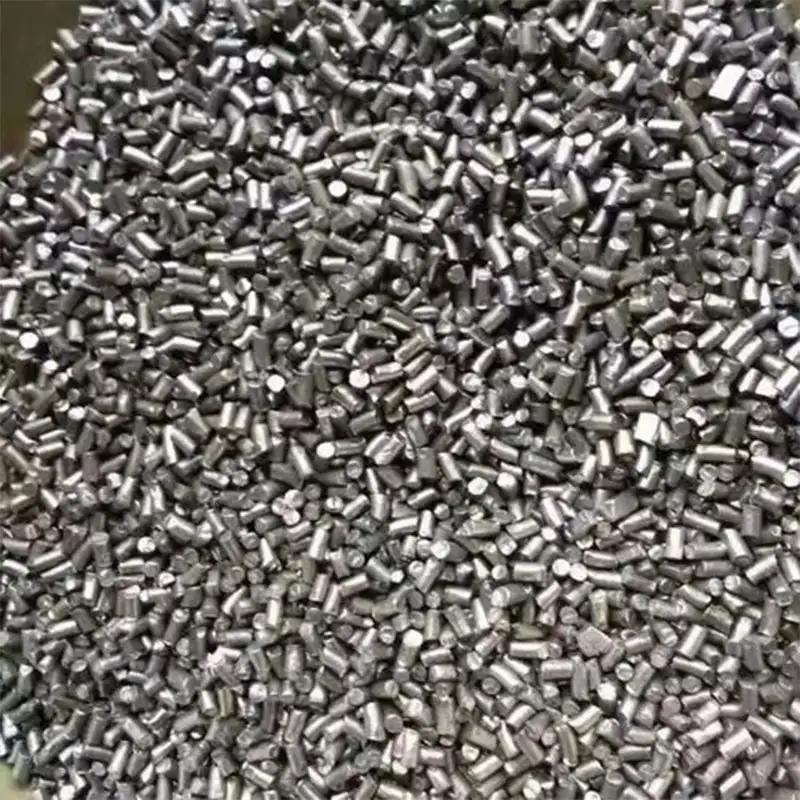
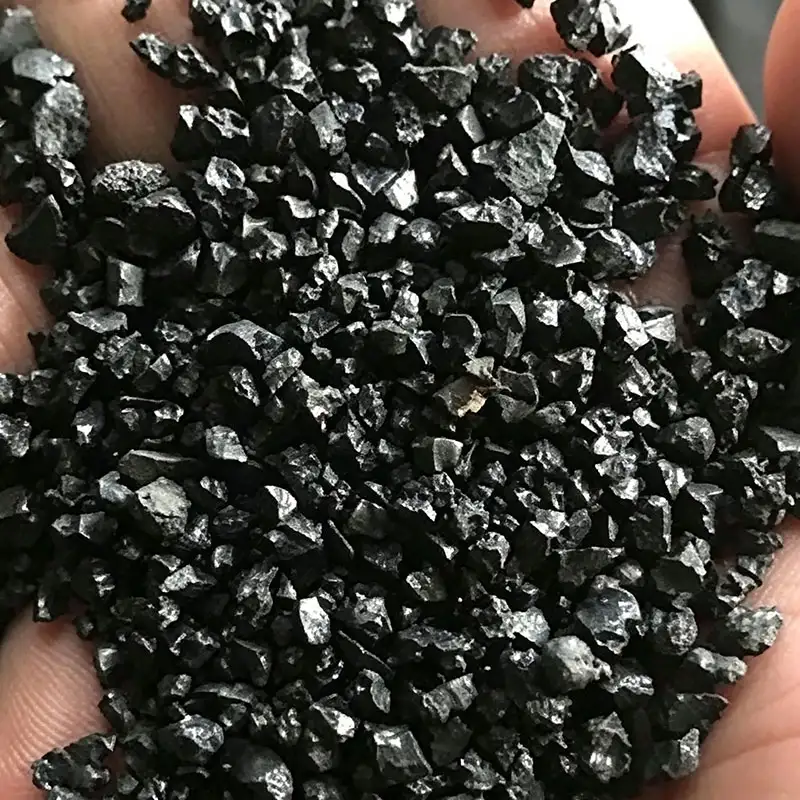
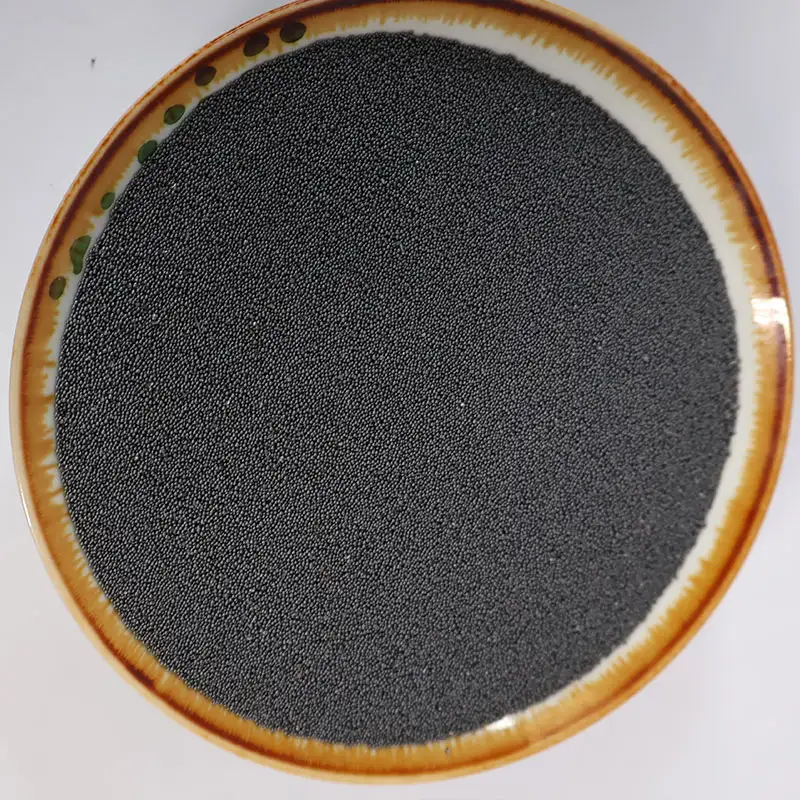
Haishan's solution is manufactured from purified high-density granules and is designed around these requirements. Its approximately 7.0 g/cm³ bulk density provides substantial weight within a relatively compact filling volume, making it suitable for machinery where available space is limited.
Why Does High-Density Counterweight Sand Matter?
Counterweight design is fundamentally about achieving the required mass within a controlled physical space. When equipment has limited internal cavity dimensions, a low-density filler may require excessive volume. A high-density granular material can provide the necessary ballast while making more efficient use of the available cavity.
This is particularly important in machinery frames, automated equipment cabinets, rotating equipment, and vibration-sensitive structures. Properly distributed ballast can help:
- Increase overall equipment stability.
- Reduce unwanted movement during operation.
- Improve resistance to vibration-induced displacement.
- Provide a consistent internal weight distribution.
- Reduce the need for wet mixing and curing processes.
- Support flexible equipment assembly and maintenance procedures.
However, density alone should not determine material selection. Particle geometry, moisture behavior, flow characteristics, purity, and vibration stability are equally important when the material is intended for mechanical filling.
What Are the Key Performance Features?
A reliable counterweight filler should be designed for the complete filling process rather than simply optimized for weight. Several characteristics make Mechanical Filling Counterweight Sand particularly useful for industrial applications.
High and Consistent Bulk Density
With a nominal bulk density of approximately 7.0 g/cm³, the material can provide substantial ballast within enclosed cavities. Consistent density also helps engineers estimate the quantity required for a specific target weight.
Optimized Particle Shape
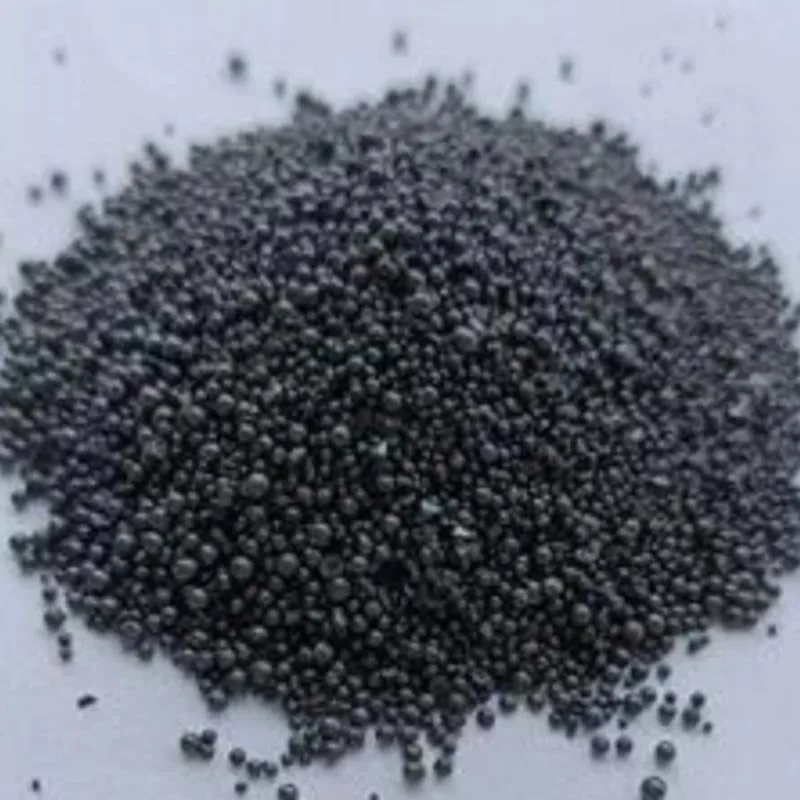
Particle shape and surface characteristics influence how granular materials behave during conveying. Spherical and rounded characteristics can reduce inter-particle friction, supporting smoother movement through negative-pressure pipelines and reducing the possibility of bridging or blockage.
Low Moisture Absorption
Moisture can cause granular materials to clump and interfere with automated filling. Low moisture absorption helps the material remain free-flowing and more stable when used in enclosed equipment cavities or stored under controlled industrial conditions.
Vibration Stability
Machinery often operates under continuous or high-frequency vibration. The material is vibration-compacted before shipment to stabilize particle arrangement and reduce the risk of excessive settling, stratification, or localized weight changes during service.
Purified Composition
For equipment containing sensors and precision electronic control systems, unwanted magnetic particles can be a concern. Multiple purification stages are used to remove residual magnetic particles, helping minimize potential interference with sensitive components.
Mechanical Filling Counterweight Sand Technical Specifications
The following specifications provide a practical reference for engineers, equipment manufacturers, and purchasing teams evaluating this type of dry counterweight filler:
| Parameter | Specification | Importance |
|---|---|---|
| Material Base | Purified high-density granules | Provides stable ballast performance |
| Bulk Density | 7.0 g/cm³ ±2% | Supports compact high-weight filling |
| Particle Shape | Spherical and rounded characteristics | Improves flow through filling systems |
| Magnetic Particle Content | Zero residual magnetic particles after purification | Helps protect nearby sensitive components |
| Moisture Behavior | Low moisture absorption | Helps reduce clumping |
| Vibration Stability | Vibration-compacted before shipment | Reduces settling and weight redistribution |
| Applications | Dry filling, machinery ballast, vibration damping | Suitable for multiple industrial systems |
| Packaging | Ton bags, steel drums, custom containers | Supports different handling systems |
Where Is Mechanical Filling Counterweight Sand Used?
The versatility of dry granular ballast makes it suitable for many industrial applications. Typical applications include:
- Heavy machinery chassis: Adds ballast to frames and structural assemblies where additional stability is required.
- Automated equipment cabinets: Provides internal counterweight without introducing wet materials.
- Fan housings: Helps increase stability in equipment exposed to rotating forces and vibration.
- Air compressor frames: Adds compact ballast to reduce movement during operation.
- Vibration processing equipment: Provides controlled internal mass for machinery designed for vibration-intensive applications.
- Enclosed equipment cavities: Offers a practical dry filling solution when cement mixing is inconvenient or unsuitable.
For manufacturers developing customized equipment, the material can also be considered during the initial mechanical design stage. Engineers can reserve an appropriately sized cavity and determine the required ballast based on target mass and available internal volume.
How Does It Support Automated Filling?
Automation is increasingly important in industrial manufacturing because repeatable filling can improve production consistency and reduce manual handling. Mechanical Filling Counterweight Sand is designed to accommodate automated dry filling processes.
Its optimized particle characteristics allow the material to move through negative-pressure conveying pipelines with reduced friction. This can help minimize interruptions associated with material bridging, inconsistent feeding, or pipeline blockage.
The benefits of mechanical filling include:
- More consistent material feeding: Controlled flow characteristics support repeatable filling cycles.
- Reduced manual labor: Automated conveying can reduce the need for operators to handle heavy granular materials manually.
- Cleaner processing: Dry filling eliminates water mixing, curing, and associated wet-material handling.
- Improved production efficiency: Continuous feeding can support high-volume equipment assembly.
- Better process control: Target filling quantities can be calculated according to required ballast weight and material density.
For example, at a nominal density of 7.0 g/cm³, a target ballast weight of approximately 7,000 kg corresponds to roughly 1.0 m³ of material. Actual requirements should be confirmed according to cavity geometry, packing conditions, and the customer's engineering specifications.
How Should Buyers Select the Right Counterweight Sand?
Selecting a suitable material requires more than comparing price per ton. Buyers should evaluate the complete relationship between density, filling method, equipment design, operating environment, and quality requirements.
Before requesting a quotation, prepare the following information:
- Required total ballast weight or estimated filling volume.
- Internal cavity dimensions.
- Filling port diameter and accessibility.
- Preferred conveying method.
- Expected operating temperature and humidity.
- Expected vibration frequency and operating conditions.
- Presence of electronic sensors or precision control components.
- Preferred packaging format.
- Delivery destination and estimated annual consumption.
This information allows a supplier to recommend a suitable specification and calculate an approximate material requirement. For large-volume procurement, buyers should also request batch documentation and discuss production consistency before placing a long-term order.
How Is Product Quality Controlled?
Consistent counterweight performance depends on consistent material properties. Haishan operates its production system under ISO 9001, ISO 14001, and ISO 45001 management systems, with routine quality control covering important material characteristics.
Typical inspection items include:
| Test Item | Purpose | Documentation |
|---|---|---|
| Bulk Density | Confirms weight per unit volume | Batch Certificate |
| Flow Rate | Evaluates conveying performance | Batch Inspection Record |
| Magnetic Particle Content | Checks suitability around sensitive components | Batch Test Report |
| Moisture Absorption | Evaluates resistance to clumping | Batch Inspection Record |
| Vibration Stability | Assesses resistance to settling | In-House Test Report |
Batch certificates and inspection records provide buyers with traceable information for incoming quality control. Additional third-party reports can also be discussed when specific project requirements apply.
Frequently Asked Questions
What is Mechanical Filling Counterweight Sand mainly used for?
It is primarily used for automated or dry filling of enclosed cavities in machinery and industrial equipment. Typical applications include machinery frames, automated equipment cabinets, fan housings, air compressor frames, and vibration-control equipment.
Why is high density important for counterweight filling?
High density allows the required ballast weight to be achieved within a smaller cavity. This is particularly useful when equipment has limited internal space but requires substantial additional mass.
Can Mechanical Filling Counterweight Sand be used in automated filling systems?
Yes. The material is designed with flow characteristics suitable for automated dry filling and negative-pressure conveying systems. Its optimized particle shape helps reduce friction and the risk of bridging or pipeline blockage.
Will the material settle during long-term vibration?
The material undergoes vibration compaction before shipment to stabilize particle arrangement. This helps reduce excessive settling, stratification, and localized weight shifts under normal vibration service.
Is the material suitable for equipment containing electronic sensors?
The material undergoes multiple purification stages to remove residual magnetic particles. This makes it suitable for applications where minimizing magnetic interference with sensors and precision control components is important.
Can it be mixed with cement or used for concrete casting?
No. Mechanical Filling Counterweight Sand is intended for dry filling applications. It is not formulated for cement mixing, concrete casting, or curing processes. Concrete ballast projects should use an appropriate concrete-grade material.
How much counterweight sand is required for an application?
The approximate quantity can be estimated by dividing the target ballast weight by the material's bulk density. With a nominal density of 7.0 g/cm³, approximately 1.0 m³ corresponds to about 7,000 kg under the stated density basis. Final calculations should account for the actual filling conditions and engineering requirements.
What packaging options are available?
Common packaging options include ton bags and steel drums. Custom containers can also be considered according to the customer's conveying equipment, lifting method, storage requirements, and installation conditions.
Conclusion
Mechanical Filling Counterweight Sand provides industrial equipment manufacturers with a practical way to add compact, stable ballast without relying on cement mixing or curing. High density, optimized particle geometry, low moisture absorption, vibration stability, and purified composition make it well suited to automated dry filling and enclosed machinery cavities. For buyers looking for a reliable China manufacturer and supplier, Haishan can support specification selection, bulk requirements, packaging solutions, and quality documentation. To discuss your required ballast weight, cavity dimensions, filling method, or customized packaging, contact us for a professional quotation and technical solution tailored to your application.
Related News
- How Can Mechanical Filling Counterweight Sand Improve Equipment Stability, Weight Distribution, and Operational Reliability
- How Can Steel Wire Cut Shot Improve Heavy-Duty Surface Preparation and Industrial Efficiency
- How Can Mechanical Filling Counterweight Sand Improve Automated Ballast Filling and Equipment Stability
- How Can Concrete Counterweight Sand Deliver Higher Density, Better Stability, and More Efficient Precast Production
- How Does Steel Shot Improve Industrial Surface Treatment Efficiency?
- High-Density Material Building Industrial Balance
Leave me a message